Agentic AI on the Shop Floor: Judgement Still Wins
Automation Without Judgement Is Just Faster Mistakes
The pressure has moved on from last year. Boards are no longer asking whether to use AI; they are asking where to deploy autonomous agents that act on their own, from inventory management to scheduling and customer service. Three quarters of large organisations now have an active mandate to invest in it.
Here is the problem. Analysts describe most retailers as woefully unprepared for agentic AI at any level, and they are candid that nobody yet knows exactly which skills a manager needs to work alongside the teams building these agents.
A terrible example is AI chat bots deployed to answer customer queries online. When a consumer calls in, these applications frequently say “we are exceptionally busy today, you might find it easier and quicker to get the answer from our online system”. But most of the time you never do, unless you are lucky enough to get a human answering your query. Far too often they drive you through circular conversations where you have to enter the same data more than once and it doesn’t take long to realise that the chatbot was never tested with real customers with real queries, other than the most trivial ones. Customers could be forgiven for thinking that the company has prioritized saving staff hours by putting multiple times the workload on their customers. Just look at self-checkout.
One day soon, big companies will wonder why their expensively developed brand images are declining as customers wise up and look for companies that use humans to do business so they can switch.
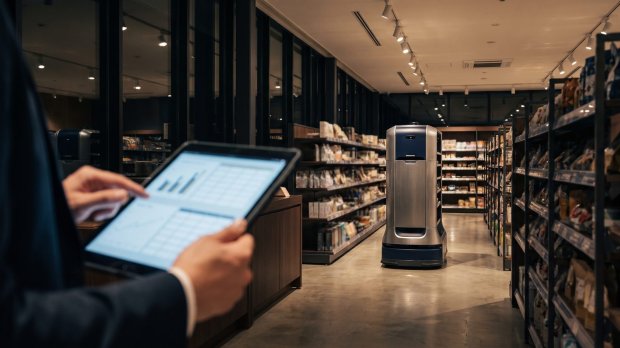
So far, a number of AI agents deployed in stores have failed miserably, partly because they were tested in headquarters labs and then rolled out to stores where real-world problems kicked in. One coffee shop chain gave store employees tablets to scan stock on shelves and the agent re-ordered replenishments. Their stock accuracy deteriorated, because they never allowed for store lighting to be worse than the test environment, meaning colours on bottles and cans could not be distinguished accurately enough in stores. Also, sometimes bottles were put back on the shelf behind another different bottle and scanned as the wrong product. Sometimes, if the bottle or can was half turned, it couldn’t be twisted at all.
This is the uncomfortable truth about automation. It does not reduce the need for commercial awareness in your people; it raises it. The routine keystrokes go to the machine. What is left for the human is the harder part: knowing when the agent is wrong, when a recommendation defies commercial sense, and when to override it.
Retailers rushing to deploy agents while cutting the very capability needed to supervise them are buying an expensive way to make mistakes faster. The winners will invest in both at once: the technology, and the commercial awareness of the people holding the reins.
Please let me know if you agree or disagree with my view.-
Posted by Brian Hume
15th July 2026