Your Christmas Shop Is Your Least Productive Space
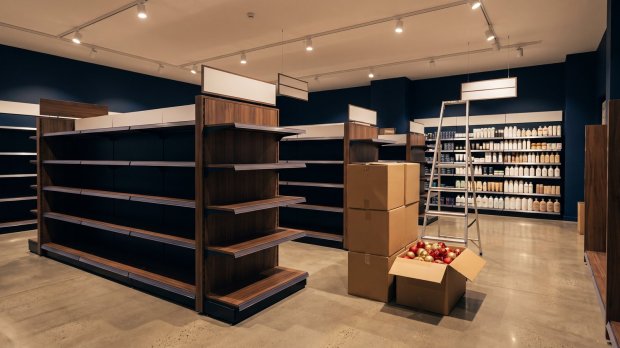
Every autumn the seasonal plan arrives from head office. The Christmas shop goes in at the front of the store. Gifting, decorations, confectionery, novelty. It takes the best space in the building, and it takes that space from lines that have been paying rent all year.
The measure stops on Christmas Eve
Seasonal space is judged on its peak. Sales per square foot in the fortnight before Christmas look wonderful, and the review meeting in January confirms that the Christmas shop was a success.
Measured over its whole life, the picture changes. The fixtures go in during late September or October. The range trades slowly for five or six weeks, sells hard for three, then goes to half price on 27 December. The residue goes to the stockroom, and some of it is still there in March. Work out the gross margin return on the space across those fourteen weeks, markdown included, and it is often below the core lines it displaced. Not always. But almost nobody checks, because the measure stops on Christmas Eve.
The cost that never appears in a report
The health and beauty bay that moved to the back still had customers. So did the compressed homewares run and the kitchen fixture that lost a third of its facings. Some of those customers did not find what they came for. A lost sale on a core line does not show up anywhere. It simply does not happen, and the report that would have caught it does not exist.
Three questions before the fixtures go in
- What is the GMROI of this space over fourteen weeks, including the markdown and the residue, rather than over the peak fortnight?
- What did the displaced lines earn per square foot last year, and what did they earn during the weeks they were compressed?
- What would happen to the total if the Christmas shop were 20 percent smaller and the clearance residue halved?
Take a 400 square foot Christmas shop at the front of a mid-sized store. Suppose it replaces a bay that earned $150 per square foot of gross margin over the same fourteen weeks last year. That bay was contributing $60,000 of margin in the period. The Christmas shop has to beat that after markdown, after the stockroom residue, and after the sales the compressed lines lost. In some stores it does. In others the numbers are closer than anyone in the January meeting would like to admit.
This is not an argument against Christmas
It is an argument for measuring seasonal space the same way as everything else. The right answer changes store by store and category by category, which is exactly why it cannot be set centrally and forgotten. It takes space planners and store managers who can do the calculation, and who are trusted to act on it.
Space management is a commercial discipline, and the retailers who make the seasonal plan pay are the ones whose people understand the arithmetic behind it. Martec's space management courses teach that arithmetic to the people who need it, from planners to store teams. Details are at martec-international.com.
-
Posted by Brian Hume
30th September 2026